Social Media
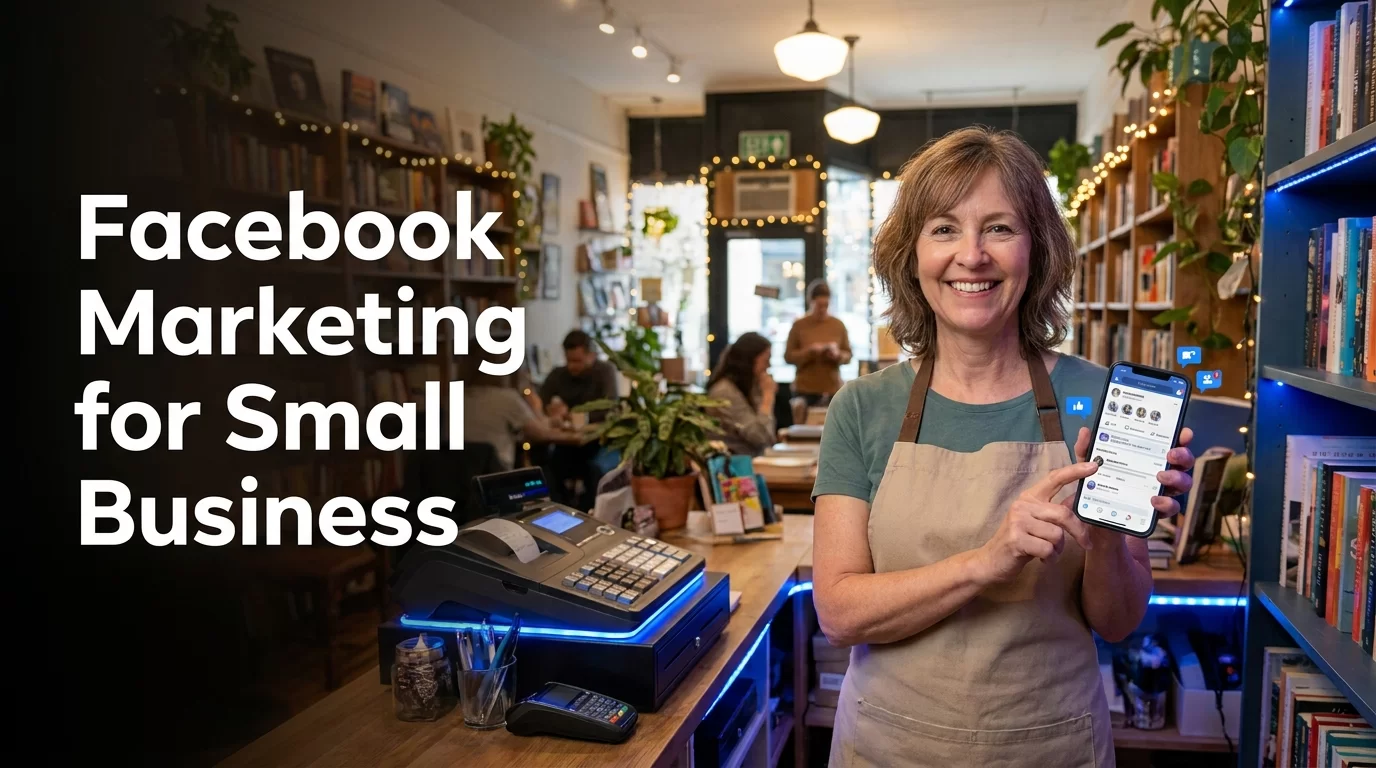
Facebook Marketing for Small Business: A Simple Guide
By the Limitless Solutions Team · Last updated October 30, 2026
Quick answer: Good Facebook marketing for a small business comes down to four things: a complete, professional business page, three to five useful posts a week, a small locally targeted ad budget behind your best content, and fast replies to every comment and message. You do not need to go viral. You need to stay visible to the people in your area.
Facebook is still one of the best places for a local business to reach customers, because that is where a huge share of your audience already spends their time. Here is a simple, practical guide to doing it well.
Is Facebook Still Worth It for Small Businesses?
Yes, and for local businesses especially. Facebook is still one of the most widely used platforms in the country. Pew Research Center’s 2025 survey found that 71 percent of U.S. adults use Facebook, second only to YouTube (Pew Research Center, 2025). It is also one of the first places people check when they want to see whether a local business is active, real, and worth contacting.
Local Facebook groups add another layer. Neighbors regularly ask for recommendations there, like “who do you use for gutter cleaning in Clemmons?”, and tag the businesses they trust. Being active, helpful, and easy to find on Facebook puts you in the running for those moments.
The mistake is thinking Facebook success means going viral. For a small business, the goal is steady local visibility, staying in front of the people in your area so that when they need what you offer, you are the name they already recognize. That is a very achievable goal, and it does not require a huge following.
How Do You Set Up a Facebook Page for Your Business?
Start with a proper business page, not a personal profile. Fill it out completely: your business name, the right category, your phone number, hours, address, and website. Add a clean profile picture, usually your logo, and a cover image that shows what you do. Then set up the action button at the top of your page, whether that is Call Now, Book Now, or Send Message, so visitors can reach you in one tap.
Completeness matters more than most owners realize. A fully filled-out page looks trustworthy and professional, and it gives both customers and Facebook the information they need to connect people with you. A half-finished page quietly costs you credibility before anyone even reads a post.
What Should a Small Business Post on Facebook?
Aim for a mix that keeps your page interesting and builds trust. Share helpful tips related to what you do, behind-the-scenes moments and team highlights that make your business feel human, customer results and reviews that prove you deliver, and the occasional promotion or offer. A good rule is to make most of your posts about helping or connecting, and only a smaller share about selling.
Photos and video almost always outperform plain text, so lead with visuals when you can. Real photos of your team, your work, and your customers beat stock images every time. And post consistently, a few times a week, rather than in bursts. Meta Business Suite lets you schedule Facebook and Instagram posts for free, so you can batch a few weeks at once. For a platform-by-platform breakdown, see how often a small business should post on social media.
Should Small Businesses Run Facebook Ads?
For most local businesses, yes, even on a small budget. Facebook ads let you target people in your specific area with real precision, which makes them surprisingly cost-effective compared to traditional advertising. You do not need a big spend to start seeing results, and local targeting keeps your money focused on the people who could actually become customers.
A simple way to begin is to put a small daily budget, even 5 to 10 dollars, behind your best-performing posts and a straightforward offer. Watch which ads bring in real leads and calls, then move more budget toward what works and cut what does not. Start small, learn, and scale the winners.
One thing to know before you start: some industries have extra rules. Ads for housing, including real estate listings, fall under Meta’s special ad categories, which limit how narrowly you can target by age, gender, and ZIP code. Hemp and CBD businesses face their own ad restrictions. If you are in one of those industries, plan for organic content, reviews, and search to do more of the heavy lifting.
How Do You Turn Facebook Followers Into Customers?
Followers only matter if they become customers, and the biggest lever there is speed. When someone comments or sends a message, responding quickly makes a huge difference, because interested people cool off fast. Make it easy to take the next step with a clear call to action and simple booking or contact options, and actually use Messenger to answer questions and move people toward a sale.
This is where a lot of small businesses lose customers, simply because they cannot always reply right away. Automated and AI-powered responses can answer instantly, around the clock, so leads do not go cold while you are busy. See how AI can answer and follow up with leads for you.
How Much Time Does Facebook Marketing Take?
Done well, Facebook marketing takes a few hours a week: planning what to post, creating the content, publishing consistently, and responding to the people who engage. Batching helps a lot, since creating a couple of weeks of posts in one sitting is far more efficient than scrambling for something to post every day.
If that time is hard to find, and for most busy owners it is, handing it off is often the smarter move. Here is how to decide between doing it yourself and hiring help, or you can simply have us handle the whole thing for you.
Frequently Asked Questions
They connect easily and share the same ad tools, and most local businesses benefit from both. That said, start with the platform where your customers actually spend time, then expand once you are consistent.
Three to five times a week is a solid target for most small businesses. Consistency matters more than volume, so a steady, realistic pace beats a burst of posts followed by silence.
Yes, when they are targeted locally to the right audience with good creative. Because you are reaching a small, specific area, local Facebook ads can be very cost-effective compared to broad advertising.
Many local businesses start with $5 to $10 a day, or roughly $150 to $300 a month, behind their best content and a clear offer. Give it at least a few weeks before judging results.
Yes, if the group allows it. Be helpful first, answer questions in your area of expertise, and follow each group’s rules on promotion. Being known as the helpful local expert often brings in more referrals than any ad.
Want Your Facebook Handled for You?
Book a free strategy call and we will show you exactly what we would post and run for your business on Facebook and beyond.
Keep Reading
How Much Should a Small Business Spend on Marketing?
How much should a small business spend on marketing? A common benchmark is 7 to 10 percent of revenue. Here is how…
Read the Guide
What Is an AI Marketing Agency
An AI marketing agency uses artificial intelligence to create content, answer calls, and follow up with leads. Here is what one does…
Read the Guide
What Is Answer Engine Optimization (and Does Your Business Need It)?
What is answer engine optimization (AEO)? It is optimizing your content to be the answer AI and search engines give. Here is…
Read the Guide